
Service / Statewide NC
Driveways
A gravel driveway is only as good as what is under it and where the water goes. We build and rebuild drives for homes, farms, shops and wooded lots so they hold up to traffic and do not wash out the first heavy rain.
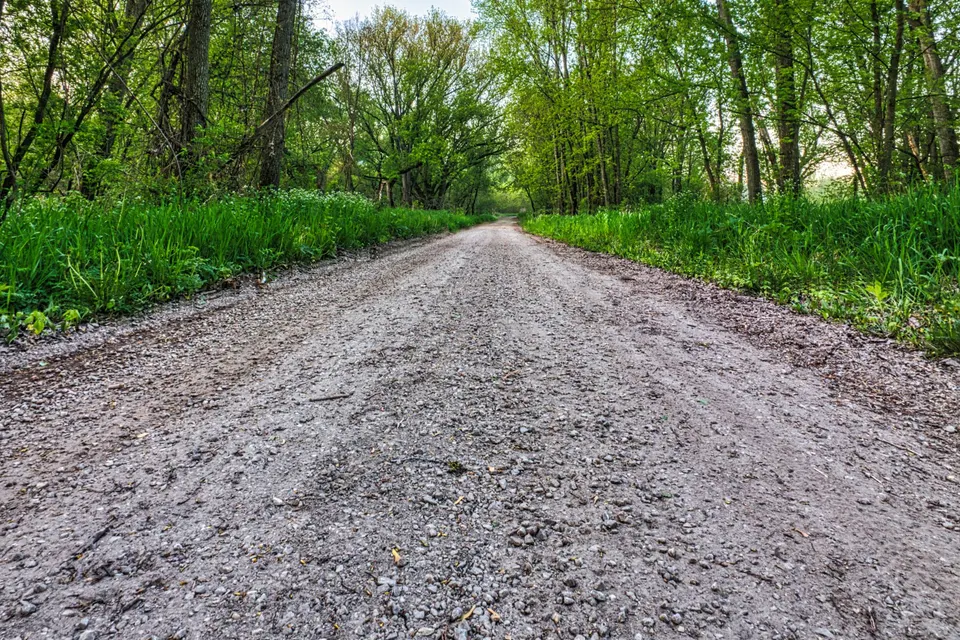
What driveway work includes
A new driveway starts with the route. Trees, stumps and topsoil are removed from the path, because organic material under stone will rot, soften and leave potholes. The subgrade is shaped so it sheds water, and soft spots are dug out or bridged. Then a base layer of larger crushed stone goes down and is compacted, followed by a surface stone that locks together and drives smoothly.
Depending on the property, the job may also include a turnaround or parking pad, a pull-off for a second vehicle, a culvert where the drive crosses a ditch, and shaped side ditches to carry water away. For existing drives, rebuilds often involve regrading a lost crown, adding base where it has pumped into the mud, and resurfacing.
Why drainage matters more than stone
Most failing gravel driveways in the Piedmont are not failing because of the gravel. They fail because water runs down the middle of the drive, sits in low spots, or soaks into a clay subgrade that turns to paste. A crowned surface pushes water to the edges. Ditches or swales carry it off. On longer slopes, turnouts or water bars steer runoff off the drive before it builds into a gully.
We look at where water comes from and where it wants to go before talking about stone. Spending a little more effort on drainage almost always costs less than resurfacing a washed-out drive every few years.
Typical stone and equipment
In North Carolina, drives are commonly built with a crushed aggregate base course, often called ABC, which contains fines that pack tight. Larger washed stone can be used where a soft subgrade needs bridging, sometimes over geotextile fabric. Surface choices vary by availability at nearby quarries and how you want the drive to look and feel.
Track loaders and skid steers do much of the cutting and spreading, a small excavator handles ditches and culverts, and a grading attachment sets the crown. Compaction equipment ties each layer together. Stone is typically delivered by dump truck, so the delivery route and a place to drop loads are part of the plan.
Factors that change the quote
Length and width set the amount of stone. Slope changes how much shaping and erosion control is needed. Existing vegetation in the route matters: a path through open field is simpler than one through woods that first needs clearing and stump removal. Soil condition matters too, since wet or soft clay may need extra base or fabric.
Access for dump trucks, the distance to a quarry, and whether a culvert is needed at a road ditch all affect the final number. If the drive connects to a state road, NCDOT has driveway connection requirements, and your county may have its own. We will mention what we know, but the owner is responsible for permits.
FAQ
Straight answers
How long does a gravel driveway last?
With a solid base and good drainage, a gravel drive can serve for many years with periodic top-ups of surface stone and occasional regrading of the crown.
Can you fix my existing driveway instead of replacing it?
Often. Many drives just need the crown restored, potholes cut out and rebuilt, and fresh surface stone. If the base has failed, part of it may need to be rebuilt.
Do I need a culvert?
If the drive crosses a road ditch or a natural drainage path, usually yes. Culverts at state roads typically need NCDOT approval for size and placement.
Can you clear the path through the woods too?
Yes. Clearing the route, pulling stumps from the driveway footprint and building the drive is a common combined job.
How wide should a driveway be?
It depends on traffic and vehicles. Room for delivery trucks, trailers or emergency vehicles usually calls for a wider drive and a turnaround. We will talk through your use.
Ready when you are
Send the ground. Get a straight answer.
A few phone photos of the property and a rough idea of what you want it to become is enough to start. We will tell you what it takes, what it will not take, and whether we are the right crew for it.