
Service / Statewide NC
Demolition for Sheds, Barns, Outbuildings and Old Slabs
Rural properties collect structures that have outlived their use: a collapsed tobacco barn, a rotted shed, a mobile home nobody will live in again, a slab where a house used to be. Demolition clears them out so the ground can be put back to work.
What we take down
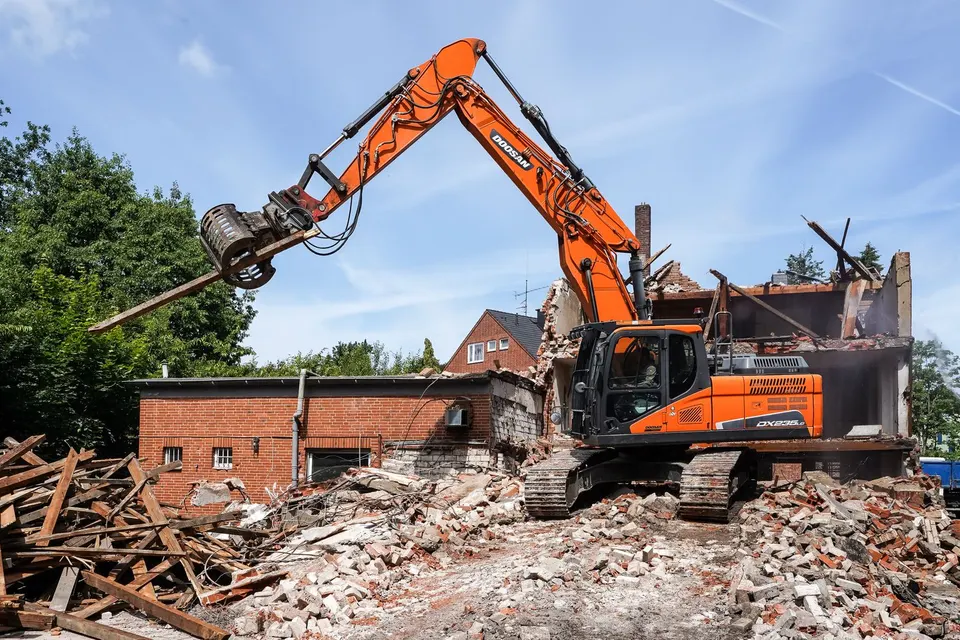
Our demolition work centers on the structures that land owners commonly need gone: sheds, detached garages, pole barns, old farm buildings, carports, decks, collapsed outbuildings, mobile homes, and concrete slabs, footings and pads. These jobs pair naturally with clearing and grading, since the goal is usually to reclaim the space for a new building, a driveway, a pasture or simply a clean yard.
For larger buildings or anything attached to an occupied home, we will discuss scope candidly and tell you if the job is a better fit for a dedicated demolition firm.
Before a structure comes down
Utilities must be disconnected at the source. Electric, gas, water and septic connections need to be shut off and capped by the right parties before any machine touches the building. Many North Carolina counties require a demolition permit, and older buildings may need an asbestos inspection before demolition, depending on the structure and local rules. Check with your county building inspections office early so the schedule is not held up.
Also think about what you want salvaged. Old barn wood, tin, beams and fixtures can have value or sentimental meaning, and it is much easier to pull them out before teardown than to dig them from a debris pile afterward.
Typical approach and equipment
Small structures are usually pulled down in a controlled order with an excavator equipped with a thumb or grapple, so walls and roofs fall inward and away from anything nearby. Debris is then separated by type where practical, since metal, clean wood, concrete and mixed construction waste may go to different places. Slabs and footings are broken with a hydraulic breaker or pried up and loaded.
After the structure is gone, the footprint is backfilled where needed and graded so it drains rather than holding a puddle where the floor used to be.
What shapes the cost
The size and construction of the structure is the starting point: a wood shed is very different from a block building with a thick slab. Access matters, especially for structures behind houses or down long farm paths. Debris volume and type drive hauling and disposal cost, which is often the biggest single factor in demolition. Concrete removal, foundation depth and any required inspections or special handling also play a role.
Some material can stay on site if you have a use for it, such as clean broken concrete for fill in an approved location. We will discuss options, but disposal must follow local rules.
FAQ
Straight answers
Do I need a permit to tear down a shed or barn?
Many counties require a demolition permit, especially for structures with utilities. Check with your county building inspections office before work begins.
Can you remove an old mobile home?
Mobile home removal is a common request. Title and county requirements vary, so confirm what your county needs before demolition is scheduled.
What about asbestos?
Older buildings may contain asbestos in siding, roofing or flooring. North Carolina and federal rules may require an inspection before demolition. That inspection must be done by a qualified inspector.
Will you remove the concrete slab too?
Yes, slabs, footings and pads can be broken up and removed as part of the job, followed by backfill and grading.
Can you clear and grade the area afterward?
Yes. Demolition often leads straight into clearing, grading or a new gravel pad, and doing it in one job saves a separate mobilization.
Ready when you are
Send the ground. Get a straight answer.
A few phone photos of the property and a rough idea of what you want it to become is enough to start. We will tell you what it takes, what it will not take, and whether we are the right crew for it.